
Partnerships · 5 min read
Building Value at Origin
Feroz Global · 30 June 2026
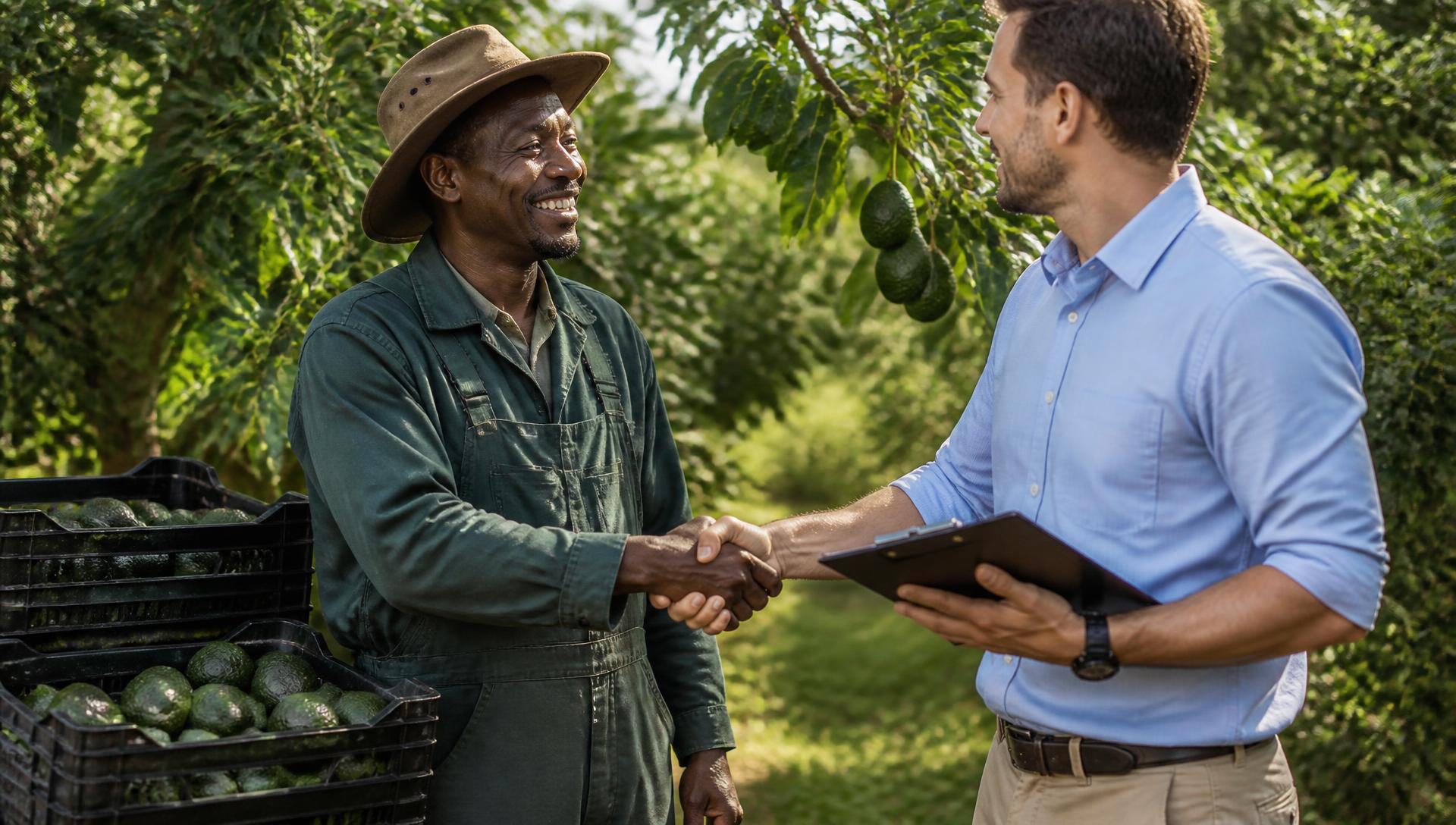
There are two ways to buy from origin. The first is to shop each season for the lowest available price, switch suppliers whenever a cheaper quote appears, and treat producers as interchangeable. The second is to commit to a smaller number of producers across seasons, invest attention in their capability, and accept a price that reflects a sustainable return to them.
The first approach looks cheaper on a spreadsheet. The second is what still delivers when a season goes badly, and difficult seasons are not rare events in agricultural trade.
What opportunistic buying actually costs
The purchase price is the visible number. The invisible costs are where the difference accumulates:
- Requalification. Every new supplier means new site assessment, new document verification, new trial shipments, and a new learning curve on your specifications.
- Specification drift. Grading, sizing, and packing conventions vary between packhouses. Consistency has to be rebuilt each time.
- Priority in a shortage. When volume is tight, producers allocate to the buyers who supported them when it was not. A price-only buyer has no claim on that queue.
- Quality investment that never happens. A producer who cannot predict next season's offtake will not fund pre-cooling, better packing lines, or certification. Those are exactly the things that improve your arrival condition.
Put together, chronic supplier churn tends to buy a lower unit price and a higher variance. In most commercial contexts, variance is the more expensive of the two.
Why predictable offtake changes producer behaviour
Producers are businesses making capital decisions under uncertainty. Cold storage, irrigation, replanting, packhouse equipment, food-safety certification, and staff training all require spending now for returns spread across later seasons. The decisive variable is not usually the price offered for one consignment; it is confidence that demand will still be there when the investment matures.
Committed offtake converts that uncertainty into a plan. When a producer knows roughly what volume is contracted, they can schedule harvest labour, pre-book packaging, and justify upgrades whose main beneficiary is, in fact, the buyer. Better handling at origin is the cheapest possible improvement to landed quality, because it prevents damage rather than sorting it out later.
What partnership looks like in practice
“Partnership” is a word that survives without content unless it is specific. In our supply relationships it means a defined set of commitments on both sides.
From us to the producer
- Volume indications early enough to plan a season, not a week.
- Specifications written down and unchanged mid-season without discussion.
- Payment terms that are honoured on the agreed date, every time.
- Feedback that is useful: what arrived well, what did not, and what to change.
- Support on export documentation and market requirements rather than a demand that they figure it out.
From the producer to us
- Honest capacity: the volume they can actually deliver at the agreed grade.
- Early warning when weather, disease, or labour will affect the plan.
- Traceability back to harvest lot, and access for inspection.
- Consistency of grading between the first container and the tenth.
Neither list is idealistic. Both are simply the conditions under which a buyer in a distant market can rely on goods produced thousands of kilometres away.
Fair return is a supply-security argument
There is a moral case for paying producers properly, and we make it without embarrassment. But the commercial case stands on its own. A producer squeezed to the point where they cannot reinvest will, over a few seasons, decline in quality, lose their best staff, or exit the crop entirely. Every one of those outcomes is a supply problem for their buyers.
Suppliers you intend to buy from in five years are worth treating as an asset, not a cost line to be minimised each season. Sourcing responsibly and sourcing securely point in the same direction more often than procurement folklore suggests.
Managing concentration risk honestly
Depth has a trade-off worth naming: fewer suppliers means more exposure to each one. A single-origin, single-producer programme is efficient until a drought, a disease outbreak, a port strike, or a regulatory change removes it in one move.
The answer is not to return to churn but to build deliberate redundancy — typically two or three committed producers per product, ideally with some separation in geography or harvest timing, each large enough to matter to and each treated as a real relationship rather than a reserve. A second supplier who has never shipped to you is not a backup; they are an untested assumption.
Seasonal complementarity is the other lever. Overlapping windows between hemispheres or altitudes can turn a seasonal product into a year-round programme without demanding that any single producer stretch beyond their natural season, which is usually where quality problems begin.
What buyers should ask for
If you buy through an intermediary, the origin relationship is being managed on your behalf whether or not you can see it. Reasonable things to ask:
- Which producers supply my volume, and how long has that relationship run?
- Are terms and specifications agreed before the season or negotiated per shipment?
- How are producers paid, and on what timeline?
- What happens at origin when a lot falls short of specification?
- Can I visit, or receive inspection reports from, the production site?
The answers reveal whether you are buying from a supply base or from a spot market wearing a supply base's clothing.
None of this requires a large procurement team. It requires deciding, once, that supplier relationships are part of the product rather than an input to be re-tendered every season — and then keeping the commitments that decision implies.
The point
Value built at origin, in handling, in capability, in trust, shows up downstream as fewer claims, steadier grading, and allocation priority when volume is scarce. It takes longer to establish than a spot purchase and it is considerably harder for a competitor to replicate.
If you are considering a multi-season programme rather than a single container, write to info@ferozglobal.com with your product, volume, and target markets, and we will be straightforward about what our origin network can and cannot commit to.